First-Time Youth Baseball Coach Guide
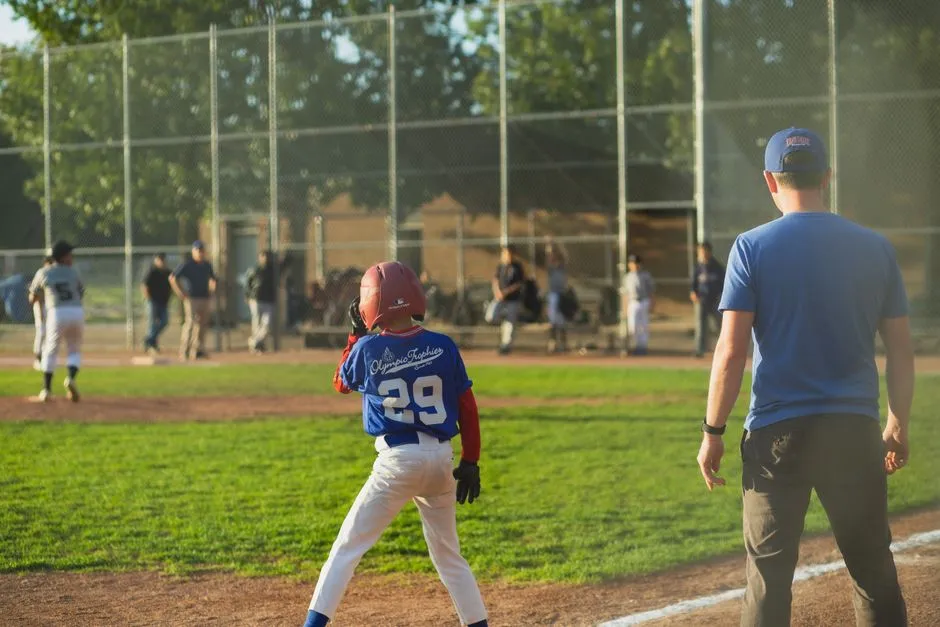
- How do you coach youth baseball for the first time?
- What should a new coach settle before the first practice?
- What should you say to families at the start?
- How do you run the first baseball practice?
- What safety plan does a volunteer coach need?
- How do you keep practice fair and useful?
- What changes on game day?
- What should the first month look like?
- The first-season coach’s field card
How do you coach youth baseball for the first time?
Start by learning your league’s current rules, recruiting at least one approved assistant, and building a simple weekly routine. Plan practices around short stations so every player gets repeated chances to throw, catch, field, and hit. Keep a written attendance, position, and pitching record; communicate one schedule through the parent channel; and decide the weather and injury plan before anyone takes the field. Your job is steady organization and safe skill development, not knowing every answer on day one.
What should a new coach settle before the first practice?
Get the league packet, not a rule summary from memory
Ask the league for the current rulebook, local rules, safety plan, field procedures, equipment policy, required training, and contact for rule questions. Confirm:
- Age division and roster
- Practice and game schedule
- Mandatory-play or participation rules
- Bat, helmet, catcher’s gear, ball, and footwear requirements
- Pitch-count, pitching-rest, and pitcher/catcher eligibility rules
- Weather, air-quality, heat, and field-closure authority
- Injury reporting and emergency procedure
- Volunteer screening, abuse-prevention, and communication policies
- Who has keys, field access, bases, first-aid supplies, and emergency contacts
Do not borrow pitch limits from another age group or organization. For example, Little League’s current regular-season pitching page ties baseball limits and required rest to league age and pitches thrown, and it also carries pitcher/catcher eligibility rules. That page is relevant only when those Little League rules govern your team. Use the rules your league supplies and assign one adult to record every pitch during games.
Build an adult team before building a lineup
One head coach cannot watch a station, help an injured player, meet a late family, and supervise the rest of the roster at the same time. Ask the league which adults are approved, then assign clear roles:
- Assistant coach: runs a station and can lead when you are absent
- Team coordinator: manages the schedule, reminders, forms, and snack or volunteer questions
- Game-day scorekeeper: records the game and supports any official participation record
- Pitch-count recorder: maintains the count and checks it with the opposing side or official process
- Weather monitor: watches the forecast and conditions under the league’s plan
The National Weather Service says the lightning monitor should not be the coach, umpire, or referee because those people are already occupied. That is a good example of a job that needs a named person, not a vague assumption.
Collect only the information you need
Use the league’s approved system for registration details, emergency contacts, authorized pickup, allergies, medical action plans, and accommodations. Keep sensitive information private and accessible only to the people who need it. Ask families how to pronounce each player’s name and whether the player needs communication, sensory, mobility, religious, or scheduling support.
Do not diagnose or invent a medical plan. Follow the written league process and the family’s clinician-backed action plan where one exists.
What should you say to families at the start?
Send one short welcome message before practice. Include the field, arrival time, finish time, what players should bring, weather-cancellation channel, and how a parent can reach the team coordinator. Then state the few expectations that matter:
- Players will rotate through learning opportunities within league rules.
- Effort, attention, and being a good teammate are coachable skills.
- Coaches will correct the action without humiliating the child.
- Safety concerns and injuries should be reported immediately.
- Adults will follow the league’s conduct and communication policies.
Use one official channel for schedule changes. A message in three apps is not better communication if families have to guess which one is current.
Keep communication with young athletes public and within league policy. The U.S. Center for SafeSport defines observable contact as easy for another person to see and interruptible contact as easy for another person to stop. Its MAAPP rules apply within the U.S. Olympic and Paralympic Movement; outside that scope, the observable-and-interruptible model is still a useful baseline, but your league’s policy controls. Never create a private-message or isolated-ride arrangement because it seems convenient.
How do you run the first baseball practice?
The first practice has three goals: learn names, see the current skill range, and teach the routine players will repeat all season. It is not a tryout and does not need advanced tactics.
Here is a recomputed 90-minute version:
| Block | Minutes | Purpose |
|---|---|---|
| Arrival activity | 10 | Easy partner toss or ball-handling while coaches check players in |
| Welcome and boundaries | 5 | Names, stop signal, field limits, water, and where equipment rests |
| Movement and throwing warm-up | 10 | Gradual movement and short, controlled throws |
| Three skill stations | 45 | 15 minutes each for throwing/catching, ground balls, and hitting |
| Team game | 15 | A small-sided game that uses one or two practiced skills |
| Close and pickup | 5 | One recap, next-practice reminder, equipment and player release |
The arithmetic is 10 + 5 + 10 + 45 + 15 + 5 = 90. Our 90-minute youth baseball practice plan turns that framework into a reusable field card.
Keep station lines short. With nine players and three stations, groups of three give everyone more attempts than one line of nine. If only one approved coach is present, reduce the number of live-ball activities and keep every player within supervision; do not run three unsupervised stations because the diagram assumed helpers would arrive.
Teach one visible cue at a time
“Get better at fielding” is not an instruction a child can perform. “Start in an athletic ready position” or “move your feet so the throw has a clear target” gives the player one action to try. Demonstrate briefly, give several attempts, then change one variable.
For each skill, use the same progression:
- Explain the purpose in one sentence.
- Demonstrate at a speed the players can see.
- Let the players try with low difficulty.
- Give one correction, not five.
- Repeat before adding distance, speed, or a decision.
Use softer training balls and shorter distance when a beginner is afraid or cannot yet control the catch. Move forward only when the player is tracking the ball and completing the current version calmly. Fear is information about the drill’s current difficulty, not a character flaw.
USA Baseball says its youth manual emphasizes enjoyment, athlete interests, positive team culture, health and safety, and practice plans that increase engagement, movement, and physical activity. That development framework is a useful check on a plan: players should spend more time doing baseball than listening to adults discuss baseball.
What safety plan does a volunteer coach need?
Know the exact field address, access point for emergency responders, nearest safe lightning shelter, first-aid location, who calls emergency services, who meets responders, who contacts the family, and who supervises the other players. Review the league plan rather than inventing one at the incident.
Head impacts
If a concussion is suspected after a bump, blow, or jolt to the head or body, remove the player immediately. The CDC HEADS UP response says the athlete stays out for the day and until a healthcare provider clears the return to sport. Do not judge severity yourself. Check for danger signs and route emergency signs to the emergency department under the league’s plan.
Lightning
The National Weather Service’s outdoor-sports guidance says there is no safe place outside during a thunderstorm. A dugout, rain shelter, or shed is not safe lightning shelter. Move everyone to a substantial building or, if none is available, a hard-topped metal vehicle with the windows closed. Wait at least 30 minutes after the last thunder before resuming. Do not shorten the wait to finish an inning.
Heat
Check the league’s heat policy and local HeatRisk or weather information before practice. Adjust or cancel when the policy requires it. Provide routine water access, use rest and shade, and watch players rather than waiting for them to ask. CDC heat guidance for athletes says people exercising in heat should drink more water than usual, should not wait for thirst, and should stop activity and get to a cool place if they feel faint or weak. Suspected heat illness needs the response specified by the league and prompt medical care.
Balls, bats, and field traffic
Create a stop signal and teach it before the first live ball. Only the designated hitter swings a bat. Keep waiting players behind the league’s protective boundary, control where balls are thrown, and inspect the playing area for holes, unsecured bases, broken fencing, and unrelated activity. Catchers use the complete protective equipment required by the league. Damaged helmets, bats, catcher’s gear, and balls leave use until the equipment manager resolves them.
How do you keep practice fair and useful?
Use a small planning grid with player names down the side and dates across the top. Record attendance, stations completed, positions practiced, and one next skill. Keep medical and family information out of this sheet.
The grid prevents the loudest memory from running the next practice. It shows that one player has not tried the infield, another missed the throwing station twice, and a third needs the easier catching progression again.
Pair players by the task, not by a permanent “good” and “bad” label. Sometimes similar skill levels create productive repetitions; sometimes a calm, accurate thrower helps a newer partner. Change pairs so one child does not become an unpaid assistant for the season.
End with two short notes: what the team improved and what comes next. Save individual correction for a calm, observable conversation, not a public post-practice verdict.
What changes on game day?
Practice is for repetition; game day adds rules, records, substitutions, and time pressure. Arrive with:
- A lineup and defensive-position plan that meets local participation rules
- Pitching eligibility and required rest confirmed before warm-ups
- A named pitch-count recorder and scorekeeper
- Player availability and pickup changes checked
- Equipment inspected and organized
- The weather and emergency plan active
- One approved adult responsible for the dugout when another coach is on the field
Do not promise a position you cannot guarantee under safety, attendance, or rule constraints. Do show families the system: track opportunities across the season, explain the rotation principles, and correct missed opportunities in the next plan.
Our beginner scorebook guide explains position numbers and common notation. The book is not just a historical record; it helps the staff verify batting order, substitutions, runs, outs, and pitcher use according to the governing rules.
During the game, keep instructions short enough to use before the next pitch. Ask one question after an error—“Where is the next play?”—then move on.
What should the first month look like?
Use a four-week loop rather than trying to install the whole sport:
- Week 1: routines, names, safe spacing, throwing and catching baseline
- Week 2: repeat the routine; add ground-ball footwork and simple base running
- Week 3: add hitting decisions and basic defensive responsibilities
- Week 4: review the notes, rebalance groups, and repeat the skills that still break under movement
The sequence is editorial, not a governing-body mandate. Change it for age, season length, facilities, attendance, and league curriculum. Repetition is not a failure to advance. A familiar structure lets players spend their attention on the skill instead of decoding a new practice every week.
The first-season coach’s field card
Before every session, answer seven questions:
- Which current league rules affect today?
- Which approved adults are present, and who owns each role?
- What is the emergency, heat, air-quality, and lightning decision?
- What one or two skills will receive the most repetitions?
- How will groups keep lines short and players supervised?
- What equipment and field conditions need checking?
- How will every player leave knowing the next date and one thing the team learned?
You do not need to perform expertise. You need a reliable plan, current rules, safe boundaries, enough repetitions, and notes that make the next practice better than the last.